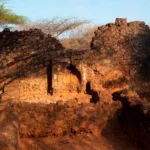
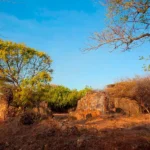
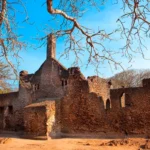
2 km east of the Maljis Hotel on the coast facing the sea are assorted ruins, and among these, on a low hill, is the pleasant site of Takwa Ruins. According to James Kirkman (who first excavated the site) Takwa belong to the 16th and 17th centuries. The remnants of a thriving Swahili trading town. In script of many relic towns on the Swahili coast, offering insights into Swahili civilization and its trading network, Takwa was deserted mysteriously in the 17th century, presumably for the lack of fresh water. The Pate chronicles claim that the towns at Manda Island succumbed to the power of Pate and many natives escaped across the creek to Lamu Island.
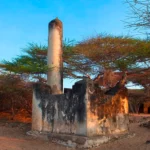
This is endorsed in the Lamu chronicle which state that although the people of Lamu were prepared to give them shelter they did not, however, permit them to build their houses of stone. Takwa Ruins have the remains of a spacious mosque; above its mihrab is a pillar. This salient detail appears once more in the 15 century domed mosque of Kilwa where the stone pillar is fluted. At Takwa, the pillar is believed to signify the burial of a Sheikh. There are remains of a second town just east of Takwa. The focal interest is the 2.5 ms high stone column at the north end.
There are didactic panels at the site providing plenty of useful information for travellers to the ruins, courtesy of National Museums of Kenya. Takwa Ruins are approached from the mainland (Shela or Lamu) via a narrow mangrove fringed channel into Manda Island. Allow yourself at least two hours to get to the ruins, although many a travel writer insist the boat tour and walk takes an hour. It is recommended to visit early to avoid the heat, bringing water and comfortable shoes. Once at the jetty, there’s a raised boardwalk leading to the Takwa ruins.