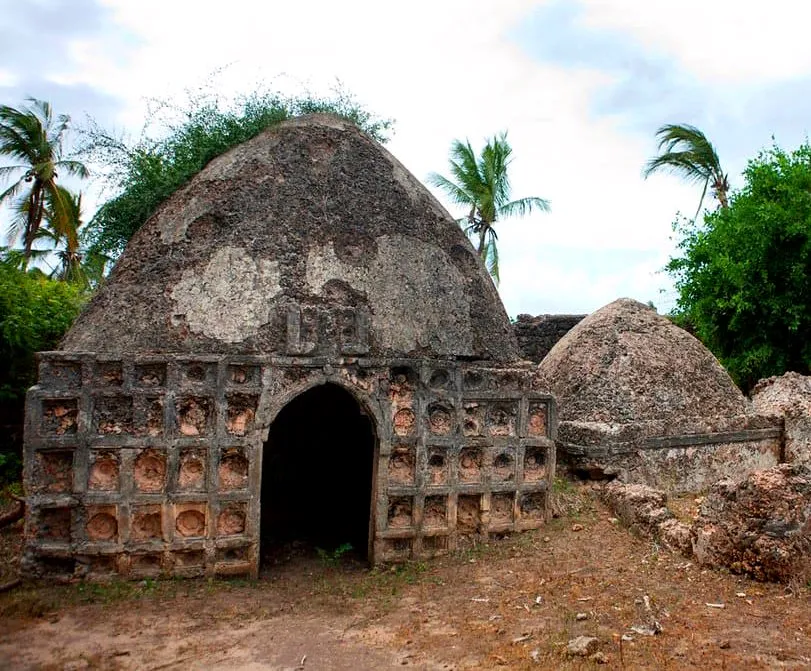
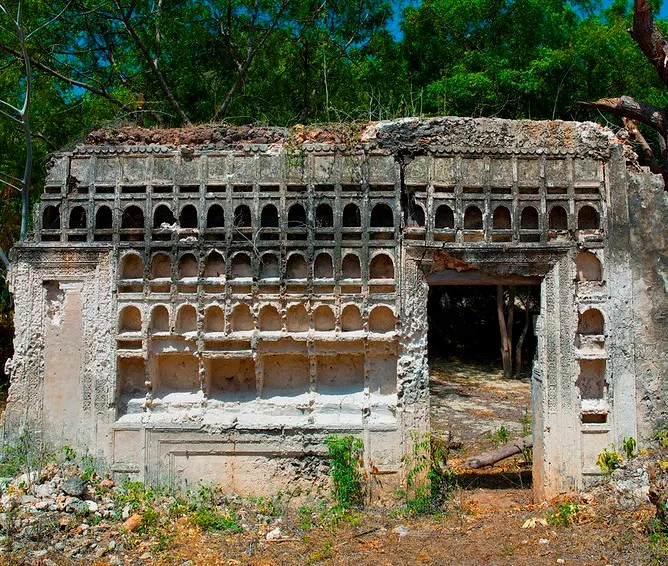
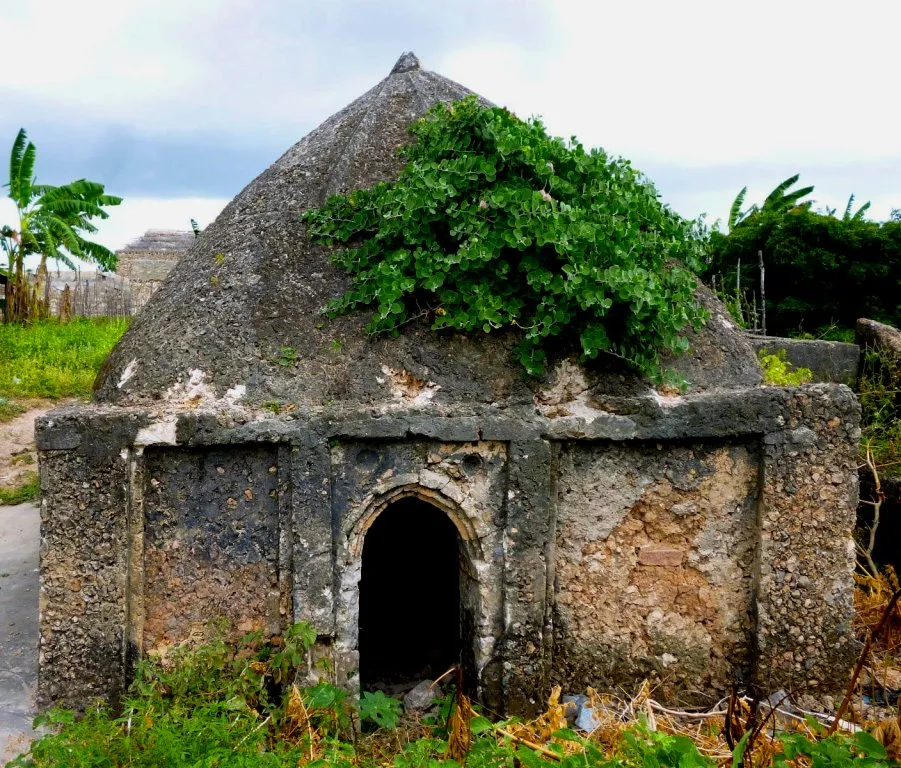
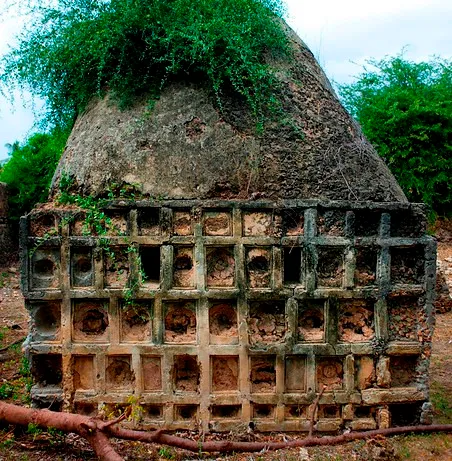
Pate Island, with three towns and a number of smaller settlements, is the largest island in the archipelago. The selfsame town of Pate lies in the south-west area. This quiet, far-flung backwater town is one of the visually dramatic, historically complex, culturally contentious and archaeologically significant sites along the coast. Its quality and quantity of remains offer insights into the architecture and life of the Swahili world from the 17th century. Part of the ancient ruins scattered in Pate, that one would be wise to find a guide to help you reach, are the crumbling Nabhani Ruins, which were later merged with the latter central earlier buildings.
It is a sprawling site of intricate houses, conspicuous tombs and elegant mosques. Also prominent on the island are the ruins of the old Swahili towns of Shanga and Faza, and the Siyu Fort. A poem written in Pate in 1652 suggests that by this time it was a centre of literary activity. Pate’s era of great antiquity, circa the 17th century, coincided with the fall of the Nabhani dynasty [members of Bani Nabhan family who ruled Oman from 1154 to 1624, when Yaruba dynasty took power] that settled at Pate. The origins of Pate do not go back before the 14 century; the first dynasty, Batawi, was ruling up to the 17th century, after which the Nabhani duly took over.
It is since the arrival of the influential Nabhani Dynasty that its records as a place of consequence piled up. The first of the Nabhanis to reach Pate was Sulayman bin Sulayman bin Muzaffar Nabhani and his two brothers, arriving in 1462. Ousted from grace, they settled into the existing settlements at Pate and began building a new domain. At her prime, with the newfangled involvement of Nabhanis, Pate grew into trade centre, dominating trade in Lamu. Pate’s prominence in trade and secluded site, sheltered and near the sea, would become a source of tremendous and persistent annoyance to the Portuguese over the 16th and also 17th Century.
End to end the Nabhani [Pate] relations with the Portuguese were of perpetual defiance. The new set of calamities was stifled by the rise of the Omani Arabs. Once the Omanis were firmly established in Muscat, they set their sights on East Africa. In 1652, they made a devastating attack on Zanzibar and killed a number of Portuguese. This marked the beginning of the Omani intrusion along Swahili Coast. Meanwhile, the resistance to Portuguese rule was centered on the Nabhani state of Pate, which would in time become the base for Portuguese resistance. Pate revolted against the Portuguese several times, in 1637, 1660, 1678, 1686 and 1687.
All these revolts were suppressed granting each time proved more difficult for the Portuguese, since the Imam of Oman supplied aid to Pate. Together, they waged a prolonged and bitter conflict against the formidable seafaring Portuguese, which had imposed a protectorate on the coast in 1515, to the end of the 17th century, despite Portugal success in asserting her control over a large stretch of the coast. Garrisons occupied several points and they maintained a customs house in Pate. Among the Swahili townships Pate was the only one to dare face them in bloody street fighting, finally forcing them, with Oman’s invaluable help, to flee in 1696.
The fall of the Portuguese left a power vacuum, and the imperial idea was once again new, with dubious security logic. The exit of the Portuguese was not the self-regulating beginning of Omani control in East Africa. Civil war in Oman and the Persian invasion of the region kept them occupied for nearly a century at home, leaving the Swahili towns free to forge their own destiny. Thus, in the early part of the 19th century, Pate began a phase of new hostilities. From 1807 to 1813 an unusually ferocious battle was fought along the littoral and among the sand around Shela. It was an engagement that pitted a weaker, and somewhat united, Lamu against the herculean alliance of the two urban rivals, Mombasa and Pate.
“In reality it was a convoluted struggle that entangled the intra-urban politics and competing mainland alliances of all three city-states”. By all accounts, Lamu was the victor, and sought the help of the Omani Arabs to thwart any intended harm and retaliations. The Nabhani were finally deposed from Pate and their last leader, Sultan Ahmed bin Pamoluti, fled to mainland Lamu in 1840. So that the latter part of Sultan Seyyid Said’s reign was occupied by troublesome operations against the islands of the Lamu Archipelago, where there were complicated alliances and quarrels between the local inhabitants, the Nabhan aristocracy, and the Somalis.
His death in 1856, at sea when cruising near Seychelles, and by his will dividing his domains to his son; Oman to his eldest son, Thwain, Zanzibar and Swahili Coast to his younger son Majid; led to strife among Omanis. After the usual fashion along the coast alliances and dissociations sprung in earnest. And that’s how things stood for much of the 18th century which saw Oman’s involvement with East Africa. Though the deposed people of Pate had invited his aid against the Mazrui, they now revolted, and with Siyu did not submit to Zanzibar until 1866. Pamoluti had proven himself in Witu and later gained German protection against Zanzibar.
From Witu Pamuloti organized constant raids on the mainland plantations of the Lamu Archipelago. He died in 1888. In late October 1890, with the transfer of the Witu from Germany East Africa, British force led by Admiral Fremantle assaulted and subdued the town of Witu, the mainland capital of the Nabhani rulers of Pate; five years later, the entire region and the adjacent coastal islands came under British rule. One of the great tragedies suffered as a result of this initial attack was the loss of the original manuscript of the history of Pate, The Book of the Kings of Pate. This antique work in its various forms is representative of a living historical tradition developed in the coastal city-states of East Africa and is a treasure trove.