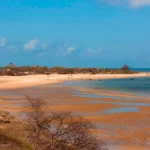
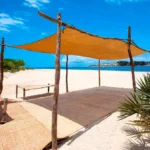
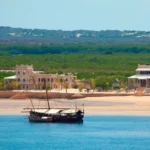
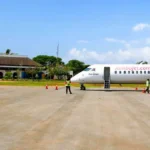
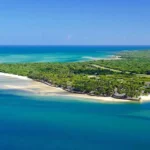
However short it may be, soon after jetting into Manda, the idea of crossing the channel from Manda to Lamu never gets old, reminiscent with how the earliest traders, rulers, and adventurers arrived here eons ago. It is a universal welcome to the exotic Lamu. Manda Airport has the feel of a cut-off patchwork of building in the depths of a lonely island. The same is reflected from the air, seaward, from the boat and on the deserted beaches of soft sand. The shores are covered with mangroves, except in a few places that are directly exposed to the Indian Ocean.
So that altogether Manda conveys the impression of a primitive, abandoned or mysterious encalve. The island is famous for its ancient towns, but you’ll find that fact about it hard to believe on appearance alone. The ancient polity of Manda was one of more than a dozen settlements that emerged in the Lamu archipelago during the period 600 to 1500 CE. The earliest known Swahili site is that of the 9th century town of Manda, which was excavated by Neville Chittick in 1966. He also uncovered 10th century houses built of square coral blocks in rough courses with mud and lime mortar. There is evidence too of 9th – 10th Century trade with Iran.
Parts of the seaward walls of the town, built of large coral blocks, have survived. Manda rose to prominence and then precipitously declined from the 15th century and, despite repeated attempts to revive its shattered economy, it remained only a minor player in relation to its more powerful neighbours, Lamu and Pate. Its difficulties, or otherwise unfortunate limbo, are still felt in unbearable hardships. It remains a pleasing island, yet as Swahili archaeology has moved on the remains of its early civilization, its ancient sites are just blissful reminders of better days. Fishing is the only source of livelihood for the islanders. Every day on the vast forlorn island anglers set out in their small boats to brave the dangers of the sea.